The Rings of Saturn
A wanderer's account moving through the landscape of Suffolk — ruins, silk, decay, and the light of distant stars folded into a single perambulation that takes months to complete.
The garden as a laboratory of attention — the snail on the foxglove, the way light describes a leaf's underside differently at different hours.
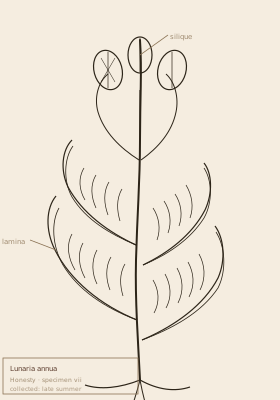
The seed pod of the honesty plant: silver discs that carry light through themselves. Transparency as a structural condition, not an aesthetic choice.
Lines marked in pencil, phrases underlined twice, passages so good they required their own index card. A year's reading distilled to twenty-three fragments.
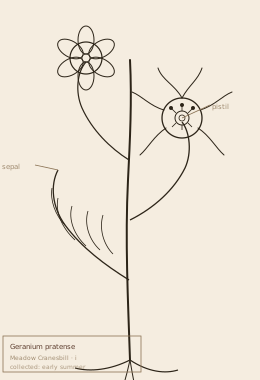
The meadow cranesbill grows where the mown grass surrenders to the unmown — a precise ecological boundary. Six petals, each veined like a moth's wing, the color of a particular afternoon sky.
Origanum vulgare prefers alkaline soil — the chalk downlands are its territory. What a plant requires of the ground it grows in tells you everything about where it belongs.
Aldo Leopold's phenological calendar: the order of spring's arrival written in species and sound rather than dates. What returns first, what follows, what has been waiting.
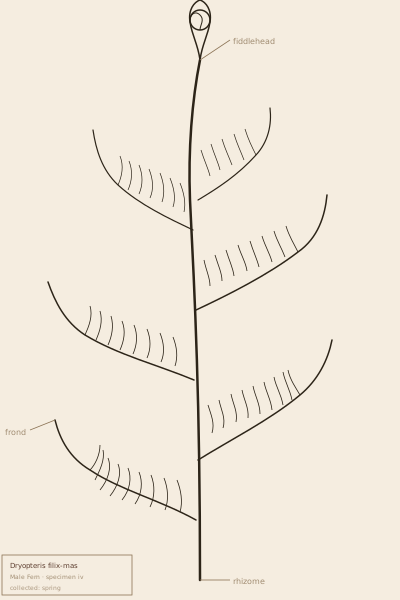
A pressed flower is a paradox: the act of preservation is also the act of killing. What persists is the form without the force — the shape of the thing, not the thing itself. The herbarium as elegy.
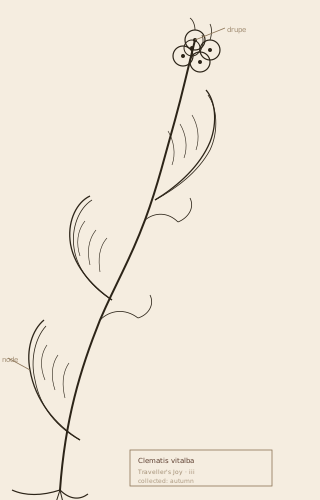
The traveller's joy turns the old iron gate into a cloud of seed-floss. Every departure made cotton-soft and temporary by its presence.
The Rings of Saturn