The Sequoia Survey Begins
First systematic cataloguing of giant sequoia groves in the Sierra Nevada. Teams of naturalists measured circumferences exceeding thirty feet, documenting specimens that predated the Roman Empire.
Geological expeditions revealed two billion years of Earth's history written in stone. Each layer a chapter, each fossil a sentence in the planet's autobiography.
Germany establishes formal protection for ancient woodland tracts. The old-growth canopy, unbroken for millennia, would become a template for conservation movements worldwide.
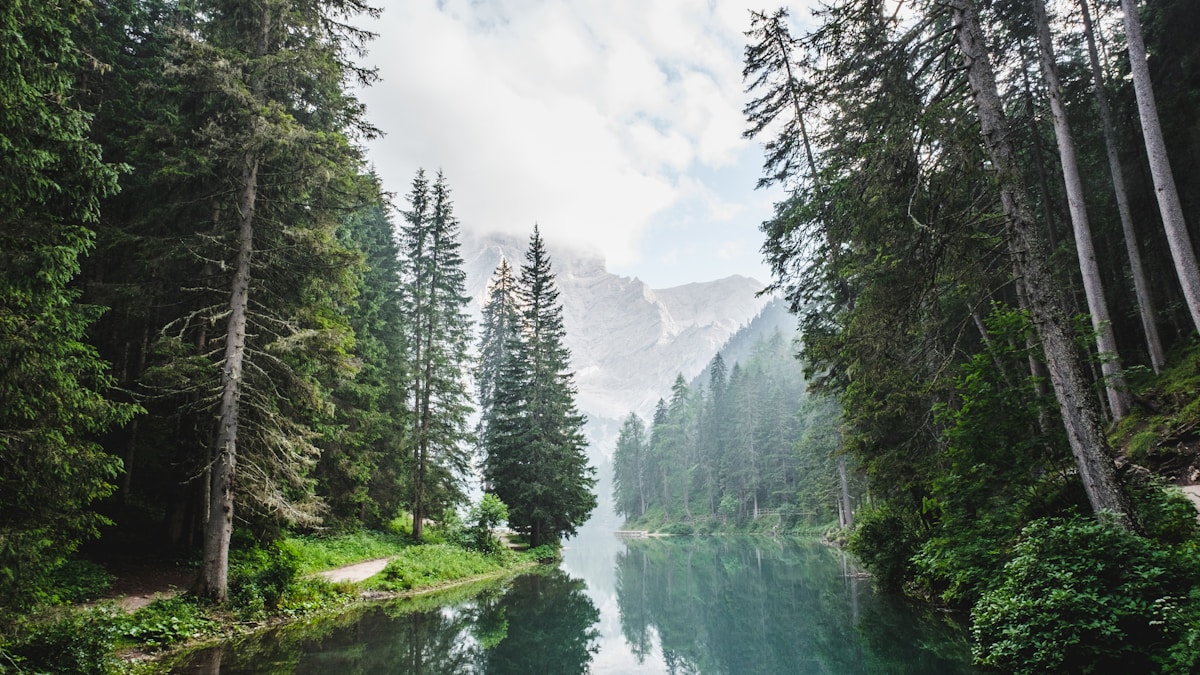
Limnological expeditions catalogued pristine glacial lakes across the Alps. Water clarity measurements from that era remain unmatched, a baseline against which all modern pollution is measured.
Aerial photography captured river delta formations for the first time. The branching patterns revealed mathematical structures that would later inform chaos theory and fractal geometry.
Tree-ring dating established as a precise chronological tool. Ancient bristlecone pines yielded records stretching back five thousand years, older than any written human history.
Botanical expeditions into cloud forests documented species unknown to Western science. The humidity-drenched canopies held entire ecosystems that had evolved in isolation for millennia.
Long-term photographic documentation of waterfall erosion patterns began. Comparing decades of images revealed geological change visible within a human lifetime.
Comprehensive surveys of remaining native prairies documented plant communities that once stretched unbroken from horizon to horizon. Less than four percent of original grasslands survived.
To preserve a moment in time is an act of defiance against entropy. Every photograph mounted behind glass, every specimen pinned to its card, every date inscribed in copper plate -- these are assertions that something mattered enough to hold against the current of forgetting. The museum exists not because the past demands it, but because the future requires it.
Consider the daguerreotype of an ancient forest, taken in 1847 by an unnamed photographer who carried forty pounds of equipment up a mountain trail. The silver-coated plate captured not just the arrangement of trees but the specific angle of November light filtering through branches that had been growing since before the Magna Carta was signed. That photograph is now the only evidence those trees existed at all -- the grove was cleared for railroad ties in 1882.
History is not the study of the past. It is the practice of preservation, the discipline of choosing what endures. Every civilization that has fallen did so not because it ran out of resources or military strength, but because it stopped the careful work of remembering. The archive is not a luxury of prosperous societies -- it is the mechanism by which societies become prosperous.
In this museum of days, each entry represents a moment when someone decided that what they were witnessing deserved to survive them. The geological survey team that measured the Grand Canyon's strata. The botanist who pressed a flower from a species now extinct. The cartographer who charted a river delta that has since shifted course entirely. Their work persists in chrome and glass, cool-lit and carefully maintained, waiting for the next visitor who understands that the past is not behind us but beneath us -- the foundation on which every present moment stands.